Home Recording, Mixing and Mastering, Explained in Plain Numbers
Continuum is a library of practical guides for people who record and mix at home: how to set the buffer before a vocal take, where the monitors go in a small bedroom, how a bus compressor reacts, how loud a master needs to be once a streaming service turns it down.
Every guide gives starting values in milliseconds, hertz, decibels and LUFS, explains why they work, and says what to listen for when they do not. Nothing here sells gear, and no guide tells you to buy a particular model: a modest interface, one decent microphone and a treated corner go further than most people expect.
Guides are grouped by topic below. New ones are added a couple of times a week.
Room & Monitoring
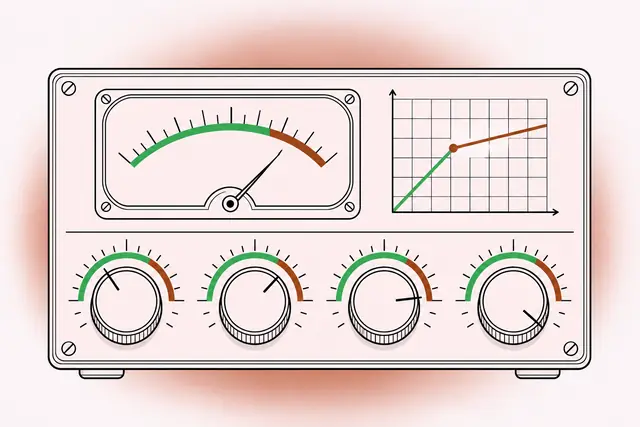
Glossary of Music Production Terms: A to Z for the Home Studio
Plain definitions of about seventy music production terms, from attack and bit depth to true peak and warping, with links to the guides that go further.
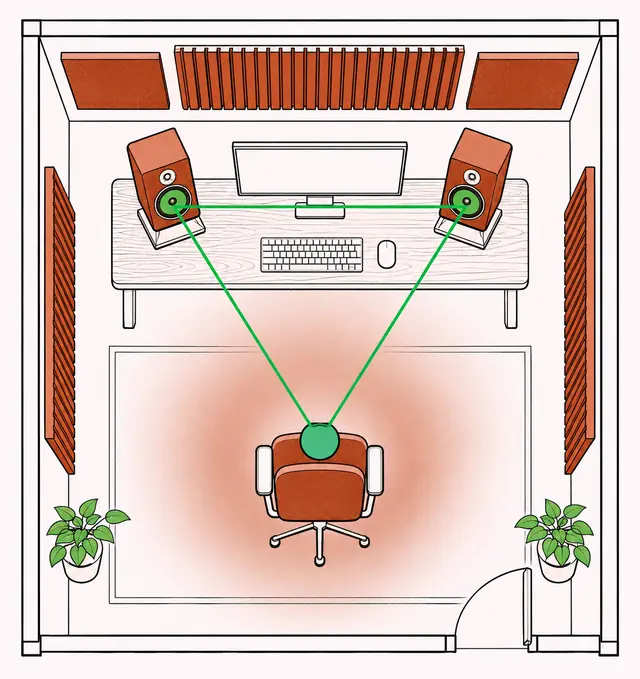
Studio Monitor Placement in a Home Room: Geometry, Height and Level
Where to put studio monitors in a small room: the listening triangle, tweeter height, front wall distance, symmetry, desk reflections and calibrated level.
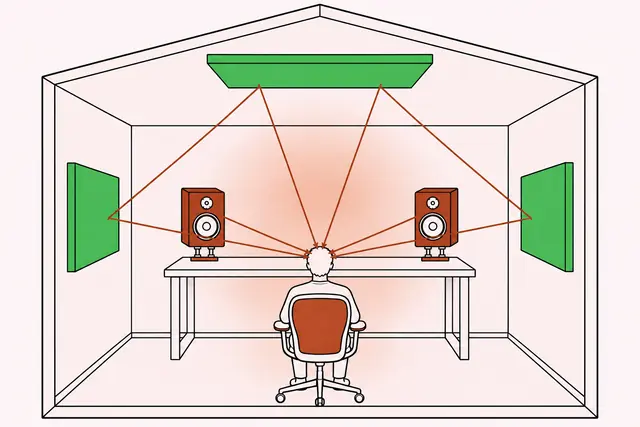
Practical Acoustics for a Home Studio: Modes, Reflections and Traps
Room modes, first reflections, bass traps, absorber depth and diffusion in small rooms, plus why treatment is not soundproofing and what to do first.
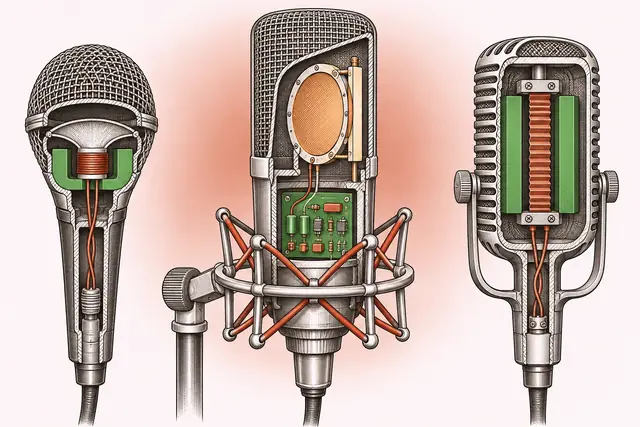
Microphones for Home Recording: Types, Patterns and Placement
Dynamic, condenser and ribbon microphones for home recording: polar patterns, proximity effect, phantom power, untreated rooms and placement starting points.
Computer & Interface
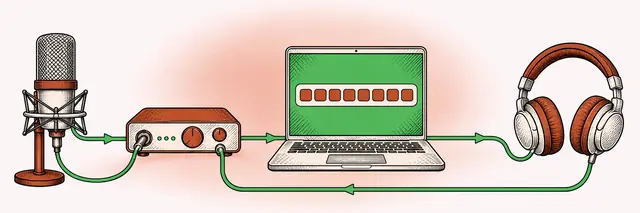
Buffer Size and Latency: Setting It for Tracking and for Mixing
How the audio buffer creates latency, which sizes suit tracking and mixing, and what to change when a session crackles or lags behind.
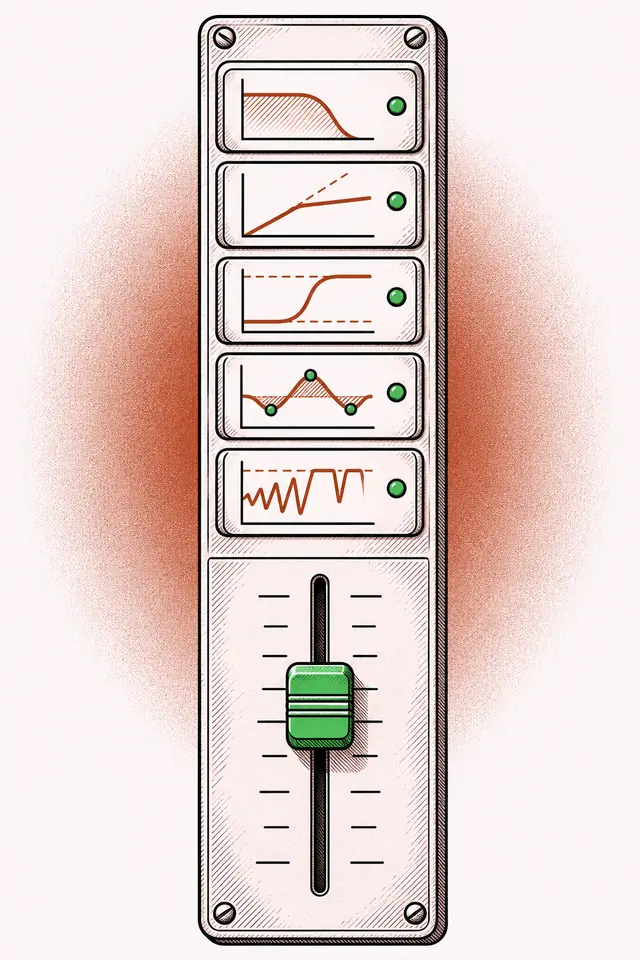
Free Mixing and Mastering Plugins: What a Free Toolkit Needs
The plugin types a free mixing and mastering toolkit needs, what to look for in each, why stock DAW tools come first, and how formats and CPU affect stability.
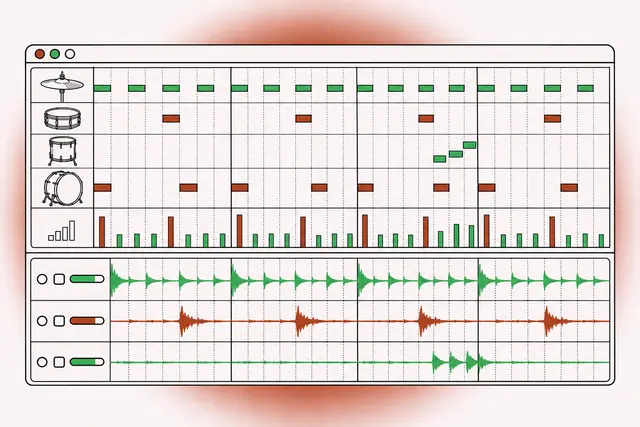
MIDI Drums vs Audio Drum Samples: How to Choose and Combine Them
How MIDI drum instruments and audio drum samples differ in realism, editing and CPU load, and how to humanize, commit, replace and blend drums in a home mix.
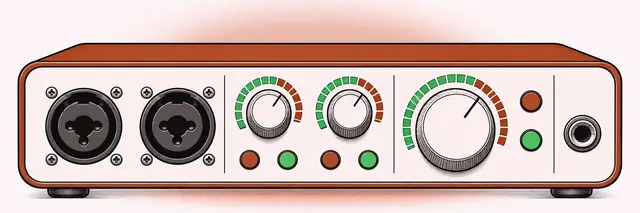
Choosing an Audio Interface: Inputs, Preamps, Drivers and Outputs
What to look for in an audio interface: input count, preamp gain for dynamic mics, converters, monitor and headphone outputs, drivers and connections.
Compression & Dynamics
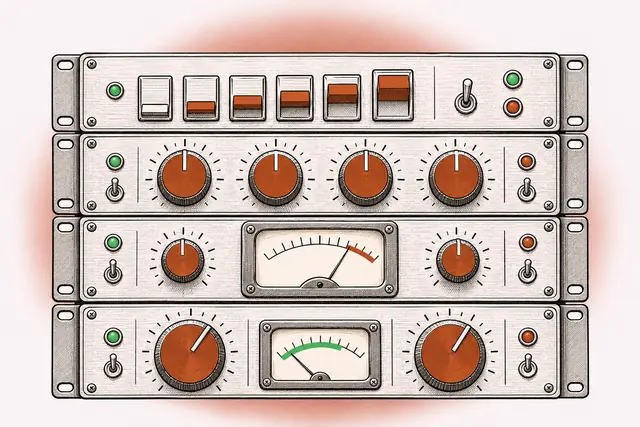
Compressor Types Explained: VCA, FET, Optical, Vari-Mu and Digital
How VCA, FET, optical, variable-mu and digital compressors work, how their attack and release behave, and which type suits each mixing job.
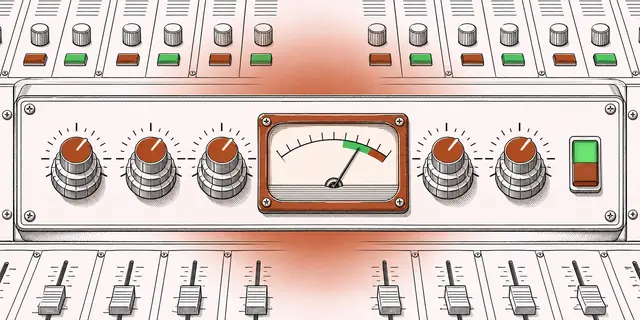
The SSL-Style Bus Compressor Explained: Controls and Settings
How the G-series console bus compressor works, what each stepped control does, and starting settings for mix bus glue and drum bus punch.
Mixing
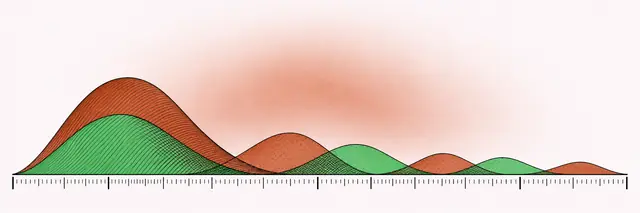
EQ for Electronic Music: Kick, Sub, Synths and the Air Band
How to EQ electronic music: kick and sub balance, high-pass discipline, carving synths, air-band shelving and small mastering moves that keep a mix open.

How to Review Your Own Mix: A Structured Checklist
A step-by-step checklist for judging your own mix: levels, balance, low end, vocals, dynamics, stereo, translation, matched references and fresh ears.
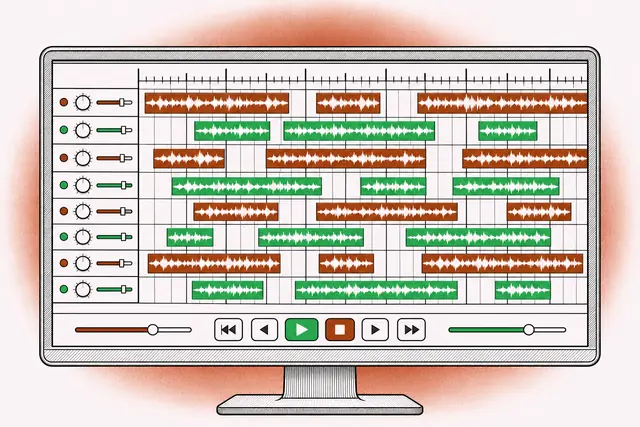
How to Approach a Remix From Stems: Tempo, Key and Arrangement
Prepare stems for a remix: find tempo and key, warp cleanly, choose which parts to keep, sketch a new arrangement and clear permission first.
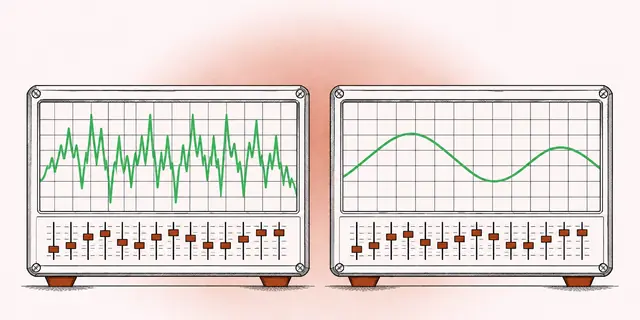
Common EQ Mistakes and Why EQ Belongs in Context
The EQ mistakes that hold mixes back: soloing, boosting first, narrow Q, louder seeming better, fixing arrangement with EQ and misused linear phase modes.
Mastering
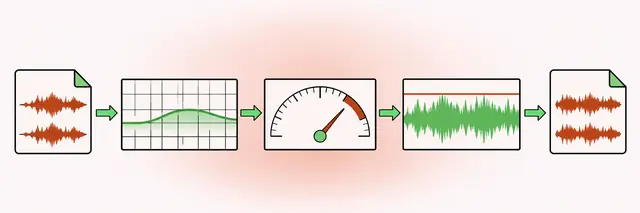
Mastering at Home: Preparing, Processing and Delivering a Track
What mastering does and does not do, how to prepare a mix for it, a sensible chain order, loudness ranges, sequencing and the files to deliver.
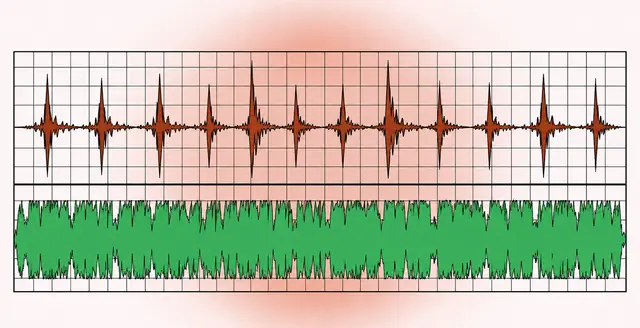
Getting Your Mixes Louder Without Losing Punch or Clarity
Why some mixes sound louder than others, what crest factor and LUFS tell you, and how arrangement, low end, saturation and staged limiting add level.